Tires, Traction Aides, and 2wd vs 4wd!
General Commentary
This section is intended to help you understand the importance and difference in how the 3 major drivers for vehicle performance interact to determine the overall handling of a vehicle. This will not deal with suspension setup as it is a topic on it's own and it's assuming the suspension has already been setup properly for the track. Out of all the options, tires are the 2nd most important to match to track conditions. Using incorrect tires will cause the vehicle to handle poorly and it won't matter what traction aides and drivetrain setup you have. Yes, those other things can HELP to hide poor tire traction, but tires can make or break how the vehicle can get around the track.
If tires are 2nd most important, what is the 1st? Driving skill. See the main article RC Car Racing 101 for more information.
2wd vs 4wd - What should I choose?
There is definitely a cost benefit to 2wd vs 4wd. 2wd tends to be a less costly option, both for initial purchase and maintenance. 2wd vehicles tend to be lighter and more nimble. 4wd is heavier and costlier, but offers superior traction both for the indoor and outdoor courses. While traction aides (next session) can assist in closing the gap, 4wd definitely offers superior traction with all other things being equal. That being said, the type and size of the vehicle definitely plays into account the amount of benefit 4wd would bring. Assuming 1/10th scale - below is what we would recommend. It is only a recommendation, and there's nothing wrong with going with a different option, it just might require more work on setup and more practice to get a handle on how to drive it.
Buggies - 2wd Recommended - Buggies tend to be light, nimble, low to the ground. Race oriented models tend to use mid-mounted motor options, spreading most of the weight over the center of the chassis (e.g. Team Associated, Losi, etc). Because of this, they tend to handle really well when setup properly even without 4wd.
Stadium/Standard Truck - 2wd/4wd Recommended - These tend to be a bit wider/heavier than buggies. Newer models are starting to offer a mid-mount motor option. The more low to the ground/light weight trucks, 2wd would be preferred (e.g. Team Associated, Losi, etc). For trucks that are more traditional and higher up, 4wd would likely have a slight advantage (e.g. Traxxas Stampede).
Short Course Truck - 4wd Recommended - Short course trucks tend to be heavier and require more "muscling" around the track than the buggies and stadium trucks. In other words, going faster speeds and doing more sliding, which also results in more collisions and crashing. Due to this, 4wd will have a leg up as even in a collision, a 2wd will tend to spin out vs a 4wd that has the front tires gripping that will help steer out of a slide before spinning. 2wd will certainly work fine, but will require more practice and driving precision.
Traction Aides
More and more vehicles are offering some form of "traction" or "stability" control. This will fall under several names. Spectrum calls their version "AVC" for "Active Vehicle Control". Traxxas calls their version "TSM" for "Traxxas Stability Management". Team Associated calls their version "DVC" for "Dynamic Vehicle Control". Whatever the name, all fall under pretty much the same technology - adding a gyro (separately or built into the receiver) which can detect exactly what is happening with a vehicle, read the input from the transmitter, and automatically change the way the steering servo is pointing (a little or a LOT) in order to assist a vehicle in going straight and turning without sliding out. In other words, if the rear of the car starts rotating in an unintended way, the system will change the angle of steering automatically to compensate. So let's say you're holding the wheel straight as you're trying to accelerate in a straight line, but the vehicle starts to lose traction and wants to "kick the rear out" in a direction. The gyro will turn the front wheels in a manner as to correct the "kick" so that the vehicle remains going in a straight line, without requiring any change to how you're pointing the wheel on the transmitter. Same with going around a turn. If you're turning the wheel a certain amount to turn, and the vehicle wants to rotate the rear and spin out, the gyro will point the tires in a direction to continue your turn and prevent the spin out. This is definitely a big help when driving. However, while it is a noticeable help, it is not magic.
1. Usually most gyros are programmable to the amount of compensation they will provide. In other words, how sensitive and how much they will compensate for a vehicle sliding. This generally requires tweaking to track condition/car setup or you will not be receiving anywhere near the maximum benefit.
2. Really poor setup - if your car is setup for the track really poorly (e.g. bad tires, incorrect suspension setup), there is only so much it will compensate for. It will likely require you to increase the gyro compensation to a point where you're making really wide or slow turns as you cannot otherwise get the proper grip. This can lead to a frustrating experience, or relatively slow lap times (although still likely faster than without the gyro).
3. Poor driving - while a gyro helps correct the steering angle, it isn't going to slow down the vehicle if you're going to fast, or compensate enough if your too jarring with the steering wheel. You can outdrive (in a bad way) the gyro and end up defeating the purpose of having it. Having a gyro doesn't mean you can just drive crazy and your car will handle as if you're an expert driver.
If your vehicle didn't come with a gyro and you are interested in adding one, you can either purchase a separate unit or buy a receiver/transmitter that has one built in. While a vehicle may not come with a receiver that has a gyro, the transmitter may work with one that does. You will want to research to see if you can add one. For example, if you have a Traxxas Slash that did not come with one, you can see which Traxxas receivers contain a gyro, and then verify if they attach to your remote (usually done through a simple biding process).
If you're looking for a cheap and easy way to add a gyro, DumboRC and HotRC offer inexpensive transmitter/receiver combos that come with built-in gyros. They have a couple of "single vehicle" remote options in the $30-$50 range that include both the transmitter and receiver, or multi-vehicle options in the $60-$100 range. With the multi-vehicle options, you can buy additional receivers (with or without gyros) to put into other vehicles you own and run them all off a single remote. For example, a DumboRC ddf-350 can hold up to 10 different vehicles, has an LCD screen, and has gyro receiver options. So if you have 3 vehicles, you can put a DumboRC receiver in each, bind it to the remote in 3 different vehicle spots so you can have your custom settings per vehicle. Additional receivers for DumboRC/HotRC generally run in the $20-$30 range. Spectrum, Futaba, Flysky all have similar options, they're just slightly more expensive (and more premium).
Tires
Getting traction on differing track surfaces requires the right tire setup. Everything else will work better in conjunction with the correct tires. Using incorrect or poor performing tires will result in slower lap times, more spinouts, and much more frustration when trying to drive.
Indoor
The indoor track is a rubber based gym floor. It tends to get a little dusty/dirty even with mopping. The best tires are softer, stickier tires. You want some squish/stickiness to the wheel/tire in order to get the best grip. We've found tread pattern to be less important than quality of the tire. Harder/stiffer rubber tires or tire/wheel combos will not work as well. RTR vehicles tend to come with harder, less tacky rubber for 3 reasons - it's cheaper, it lasts longer, and it works "ok" for bashing around on various surfaces. However, in most cases these tires do NOT work well on the indoor track. If the tire feels squishy/sticky it's the right compound. If the tire feels stiff, hard, or plastic-like (even though it's rubber) it will slide around a LOT.
Outdoor
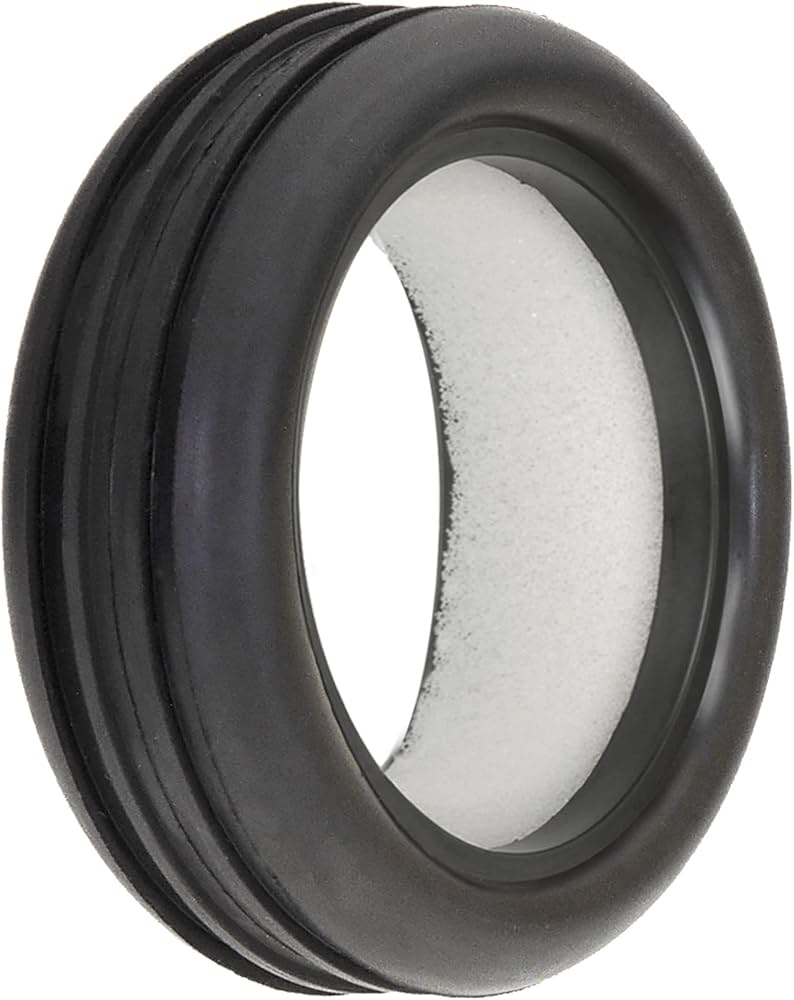
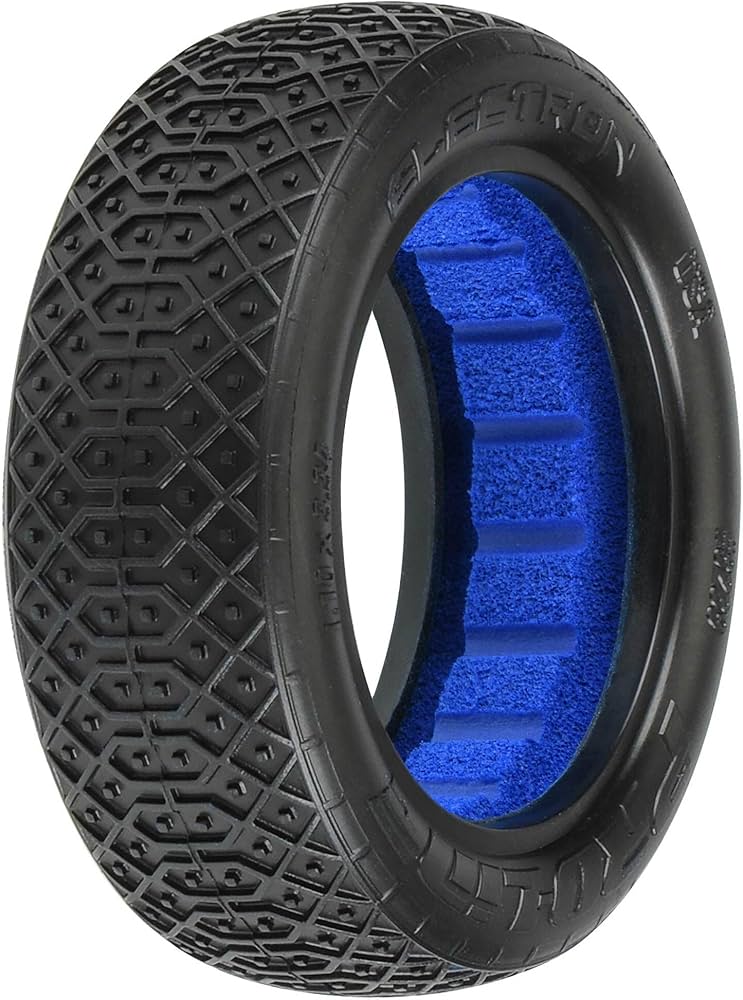
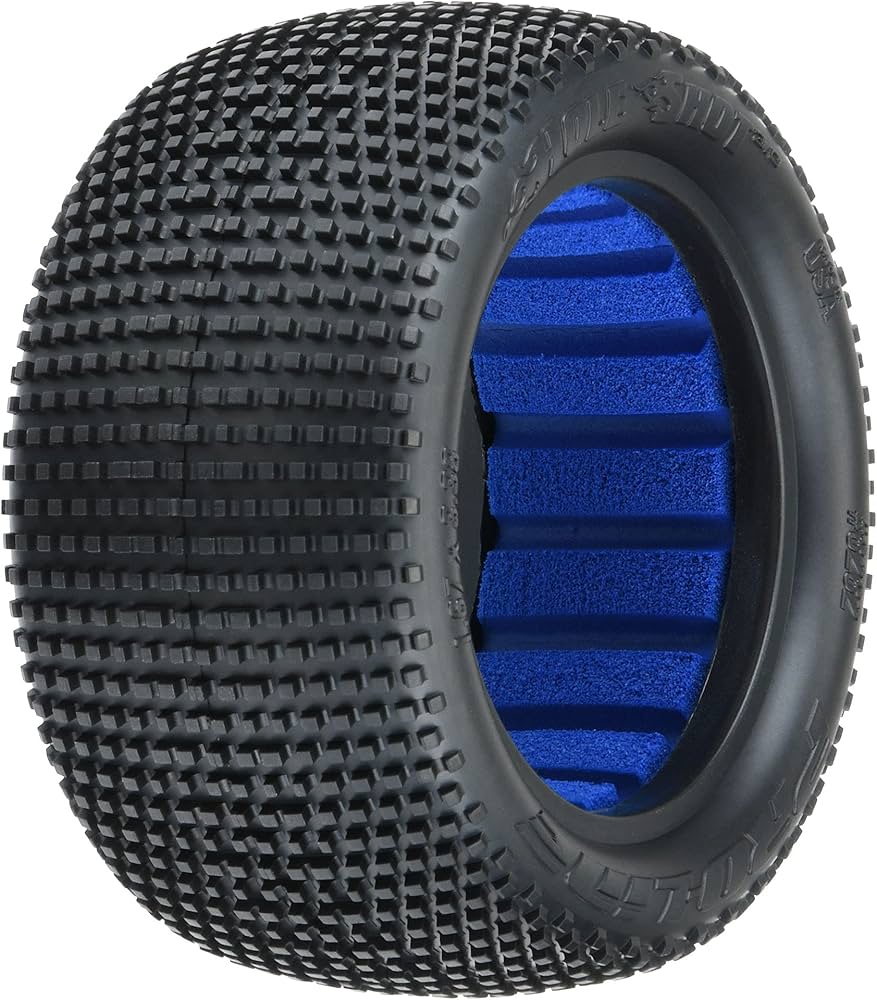
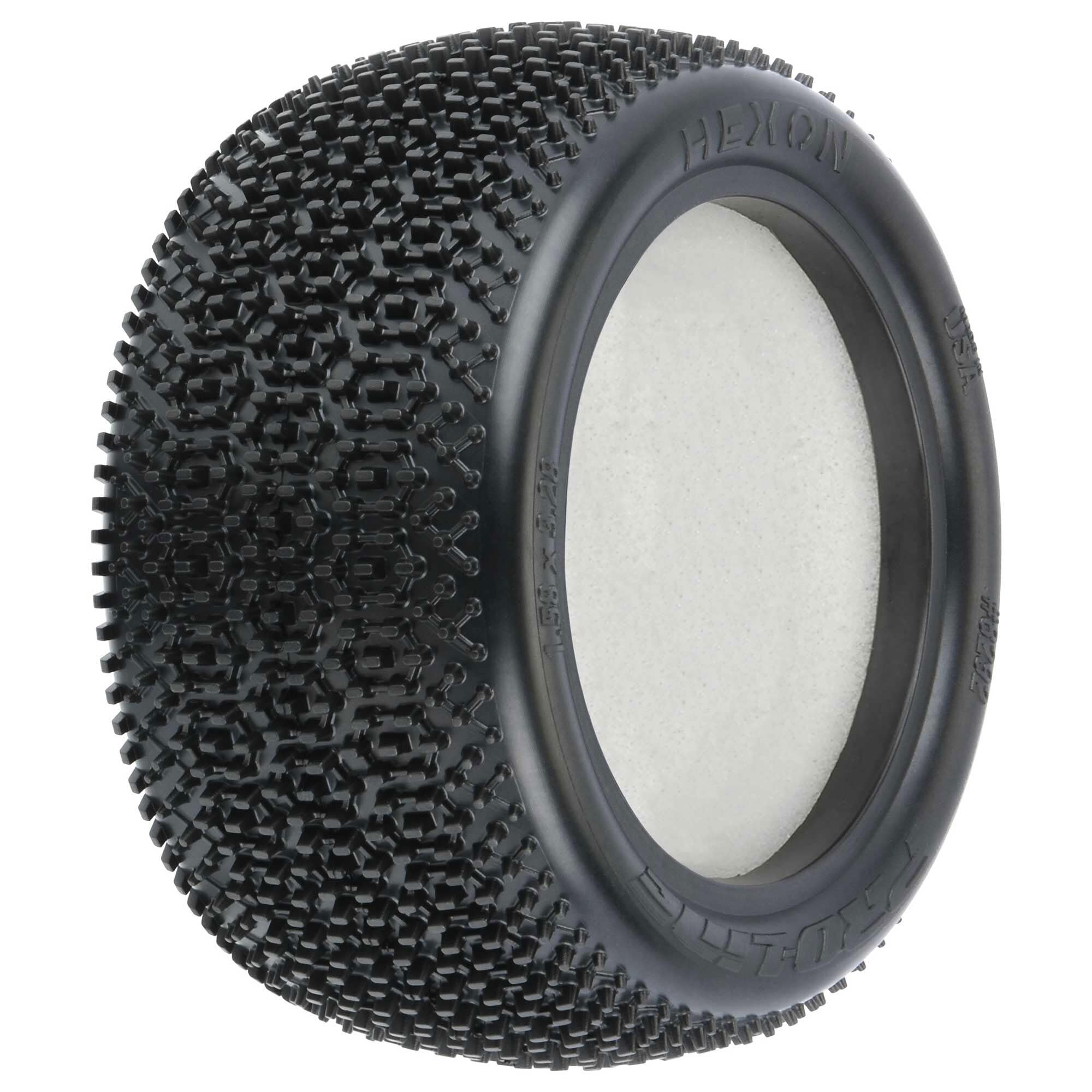
The outdoor track is a combination of slightly harder dirt with a dusty top-layer. For most vehicles, we've found that a medium spike tire to be the best in overall traction. Small spikes and large tread patterns tend to not grip nearly as well. For 4wd, 2wd short course, and 2wd standard truck, generally you want to use the same tire on the front and back. For 2wd buggy and stadium truck, generally you'll use a "ribbed" or a combo tire.
Below is meant to be 2 examples of what is meant by "medium spike" tire.
Ribbed and Combo tire